

Strengthening Urban Water Resilience
UCLG ASPAC, through its climate-focused initiatives and in collaboration with the Provincial Government of DKI Jakarta, and local partner Fasilitasi Sehat Manfaatkembali – Aman (FSMAman), launched the “Saka Alir” Water Recycling Unit (WRU) at Tebet Eco Park on 10th February 2026. It was then followed by a site visit to Dukuh atas Transit-Oriented Development (TOD) area, which forms part of a broader learning exchange on integrated, and climate-responsive urban solutions.
A grant initiative from UCLG ASPAC to the Provincial Government of DKI Jakarta, it is alsi implemented close coordination with Jakarta’s City Park and Forestry Department (Dinas Pertamanan dan Hutan Kota). It contributes to UCLG ASPAC’s ongoing efforts to strengthen local governments’ capacity to implement climate action through a practical, and locally adaptable solutions.
Responding to Jakarta’s Pressing Water Challenges

In her opening remarks, UCLG ASPAC Secretary General Dr. Bernadia Irawati Tjandradewi underscored that “Saka Alir”, with “Saka” meaning a supporting pillar or foundation, and “Alir” meaning a continuous flow that brings life; is more than a technological installation. It symbolises collaborative governance and a shared commitment to transforming urban challenges into sustainable opportunities.
“This WRU is a system that directly responds to Jakarta’s pressing issues, including groundwater depletion, land subsidence, sanitation gaps, and the high costs of centralised wastewater systems,” she stated, highlighting the need for decentralised and resource-efficient urban infrastructure in rapidly growing cities.
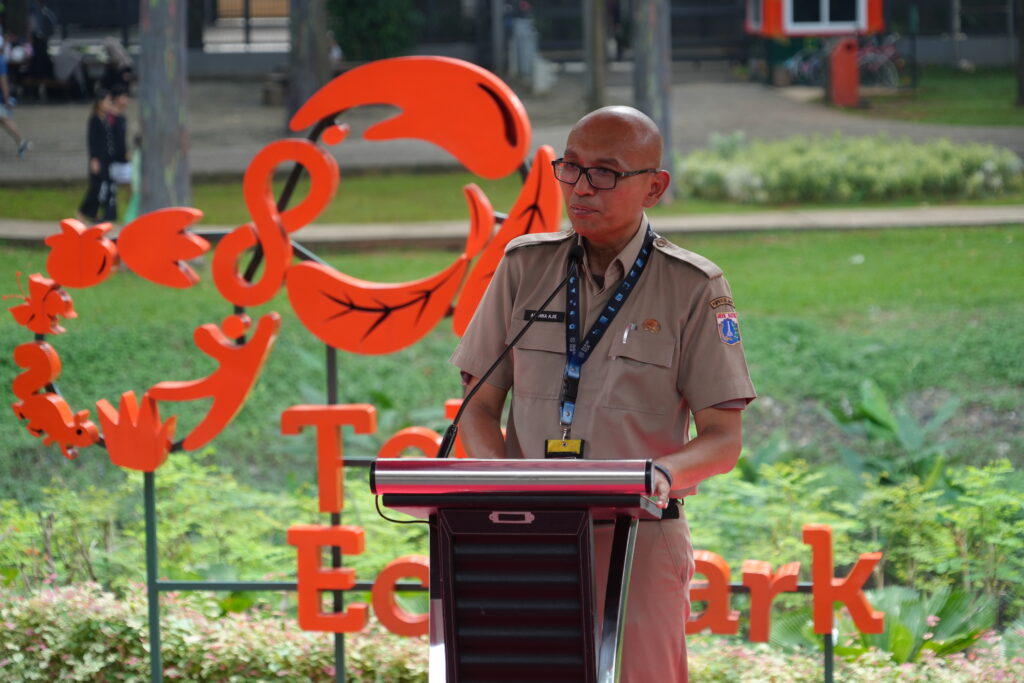
Representing the Provincial Government of DKI Jakarta, Mr. Andhika Ajie, Head of the Research and Innovation Division at Jakarta’s Regional Development Planning Agency (Bappeda), reaffirmed the provincial government’s commitment to advancing resource-efficient infrastructure as part of Jakarta’s vision as a global and sustainable city. He noted that recycling septic wastewater for non-potable use reduces groundwater extraction and pollution, making Saka Alir highly relevant to Jakarta’s long-term water resilience strategies.
Decentralised and Replicable Water Recycling System
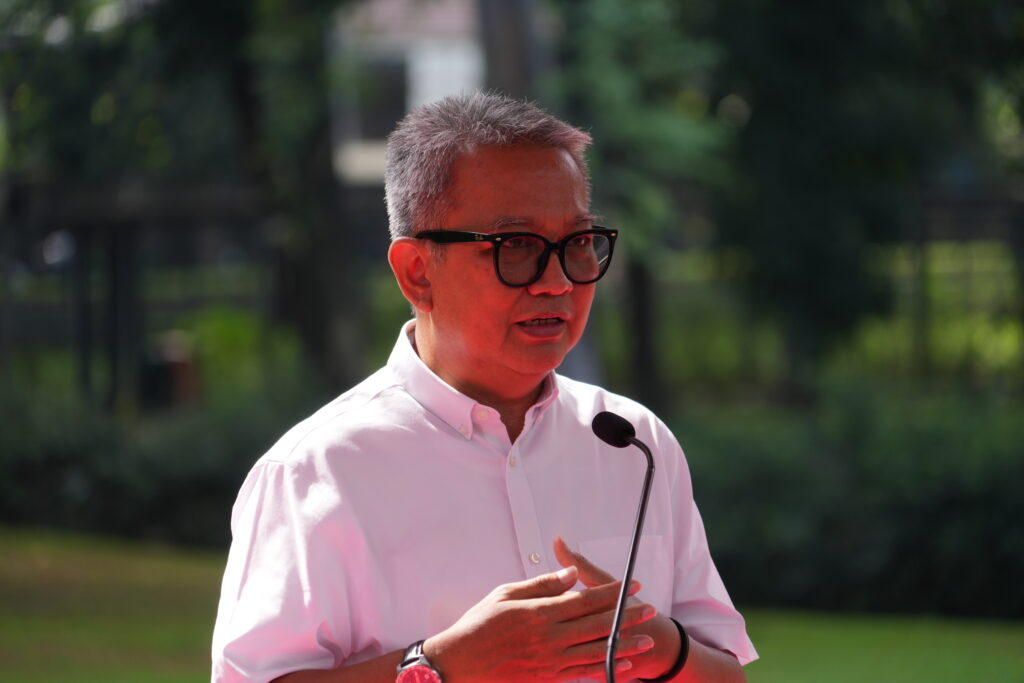
From a technical perspective, Mr. Budi Darmawan, Director of Facilitation at FSMAman, explained that Saka Alir operates through a five-stage treatment process: inlet collection, filtration and biological decomposition, purification, disinfection, and redistribution. The system utilises 100% locally sourced materials, strengthening domestic technical capacity while ensuring compliance with national health regulations.
He further noted that the WRU can reduce dependence on clean water sources by up to 40% while lowering carbon emissions compared to conventional septic systems. By applying circular economy principles in a public park setting, the initiative demonstrates tangible climate co-benefits — contributing both to mitigation efforts and adaptation to water stress. (For more information on how the WRU system works, click here.)
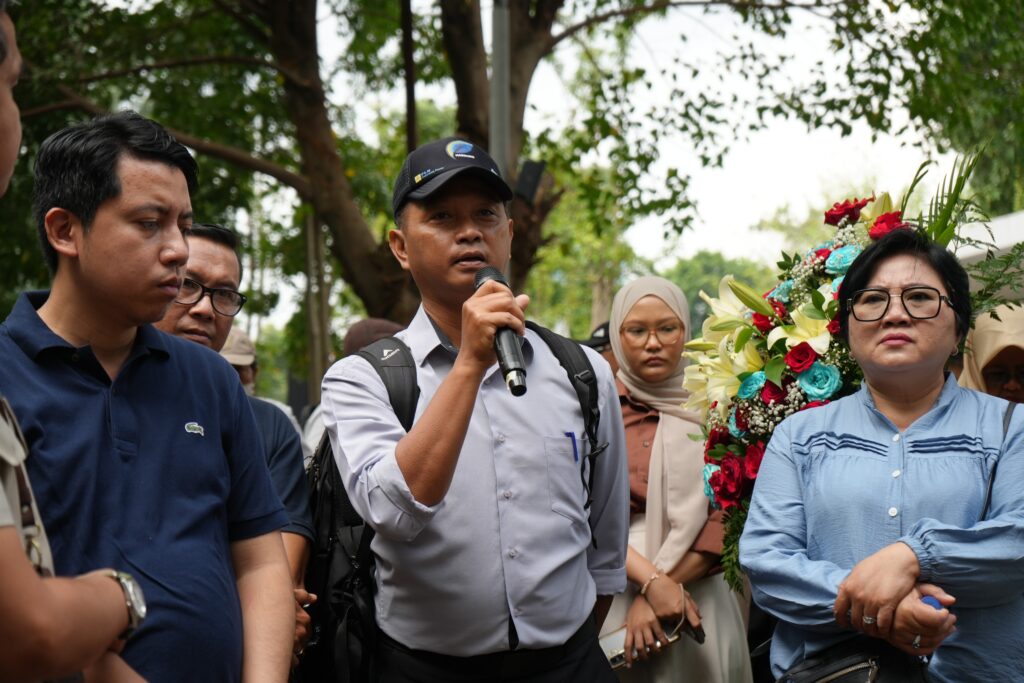
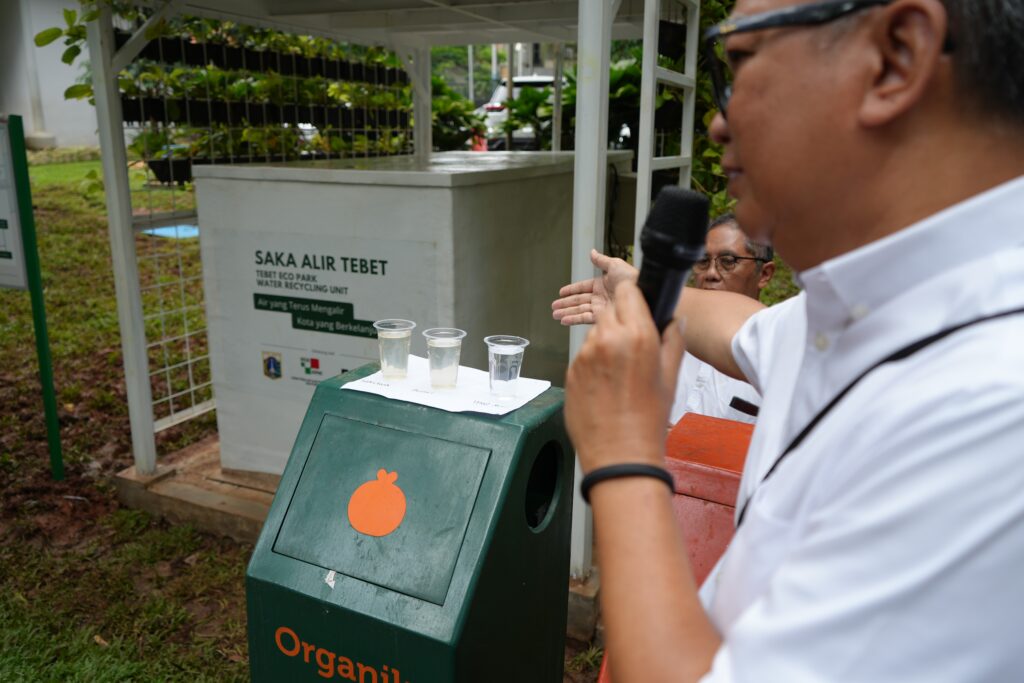
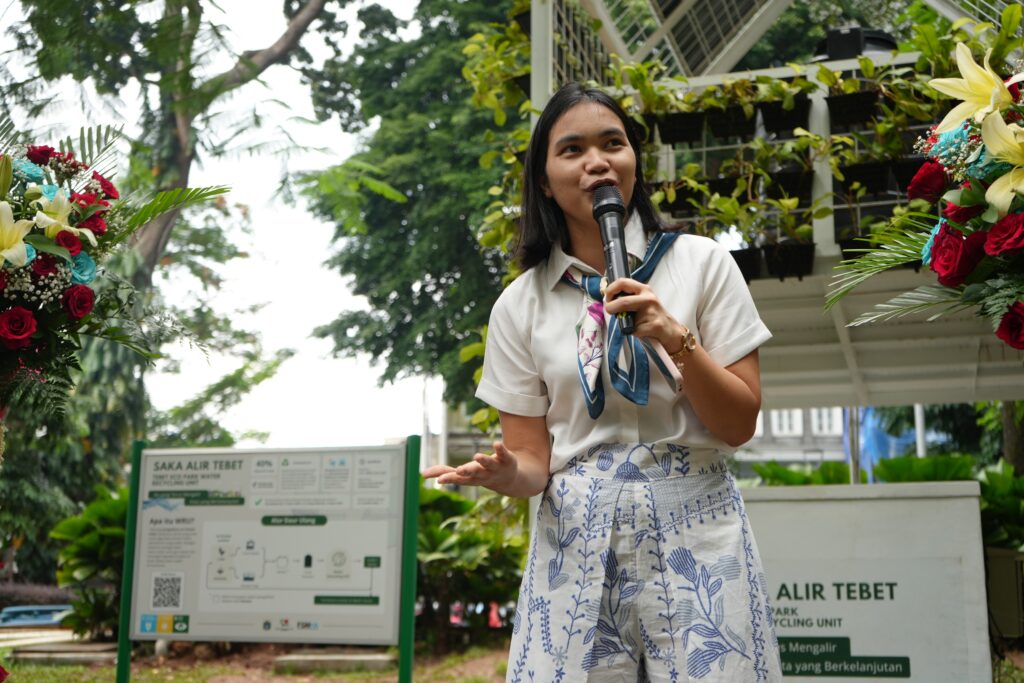
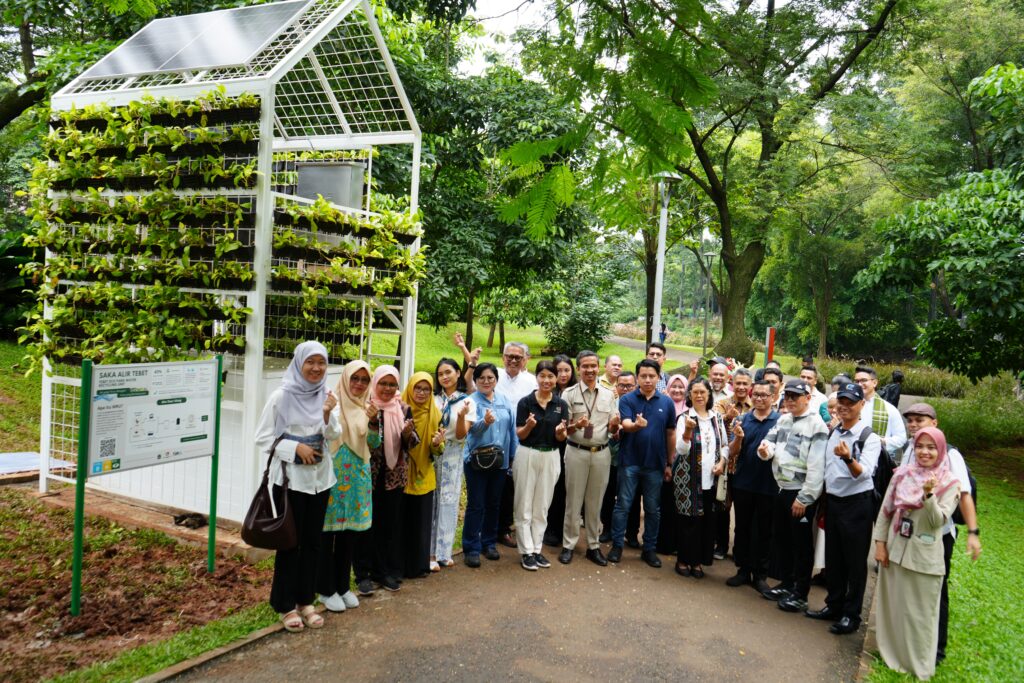
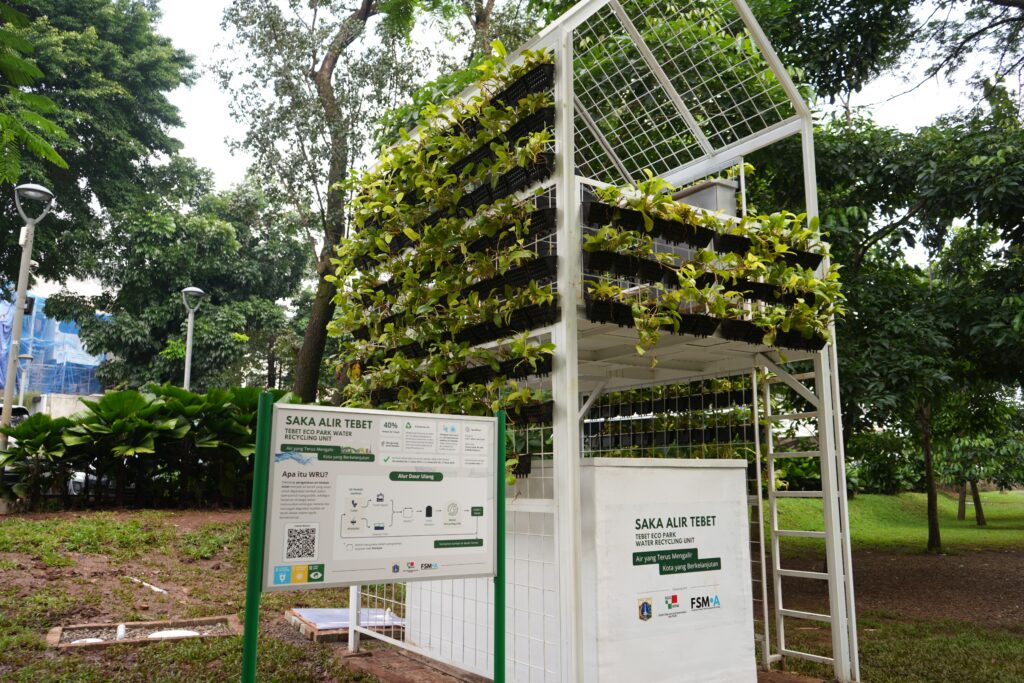
The launch gathered rerpresentatives from the Provincial Government of DKI Jakarta, UCLG ASPAC’s strategic partners, and delegations from Indonesian cities and regencies (Medan, Padang, Semarang, Mataram, Banyumas, Malang, Surakarta, Bogor, Bandung Regency, Cirebon, Depok, Kupang, North Minahasa, Pangkalpinang, Tangerang, South Tangerang, and Tangerang Regency.) A demonstration and explanation session by Mr. Budy Darmawan and Ms. Rugun Firni Sipayung as FSMAman’s Co-founder and Design Engineer followed the launch, where participants were guided through the full operational mechanism of Saka Alir.
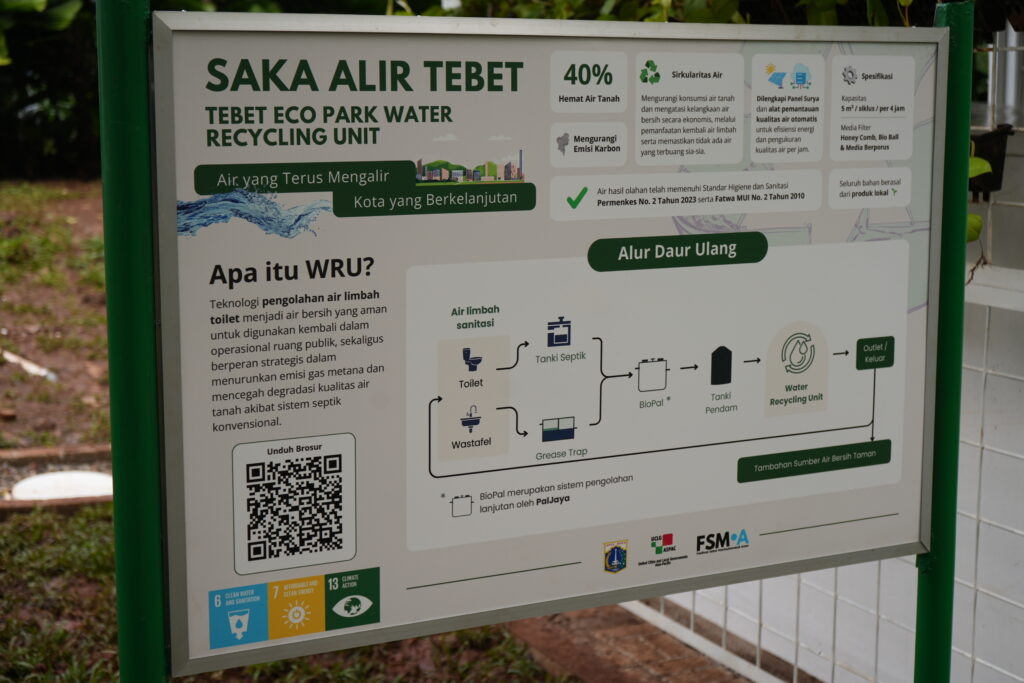
The session highlighted how domestic water is transformed into reusable water for non-potable use, such as toilet flushing and landscape irrigation with the park, thus reducing reliance on freshwater sources while embedding circular water management into public infrastructure. Dr. Budi and Ms. Rugun then emphasised how Saka Alir is built using 100% locally sourced materials and complies with national health and regulatory standards, reinforcing its potential to be replicated for other public facilities in other Indonesian cities and regions, and other local governments seeking circular, and decentralised water solutions.
Integrated Mobility and Low-Emission Urban Development: The Dukuh Atas TOD Model
Following the launch, delegations continued with a guided tour of Tebet Eco Park facilitated by UCLG ASPAC in collaboration with Sebumi, showcasing nature-based approaches to urban revitalisation, before proceeding to visit the Dukuh Atas Transit Oriented-Development (TOD) area as Jakarta’s model of integrated, and low-emission mobility.
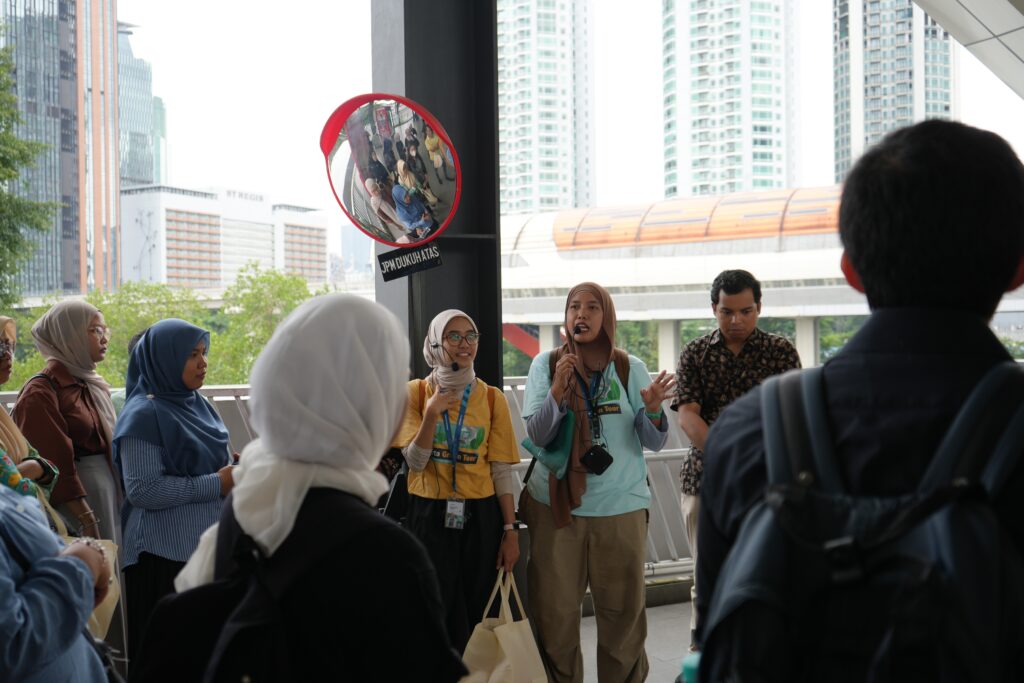
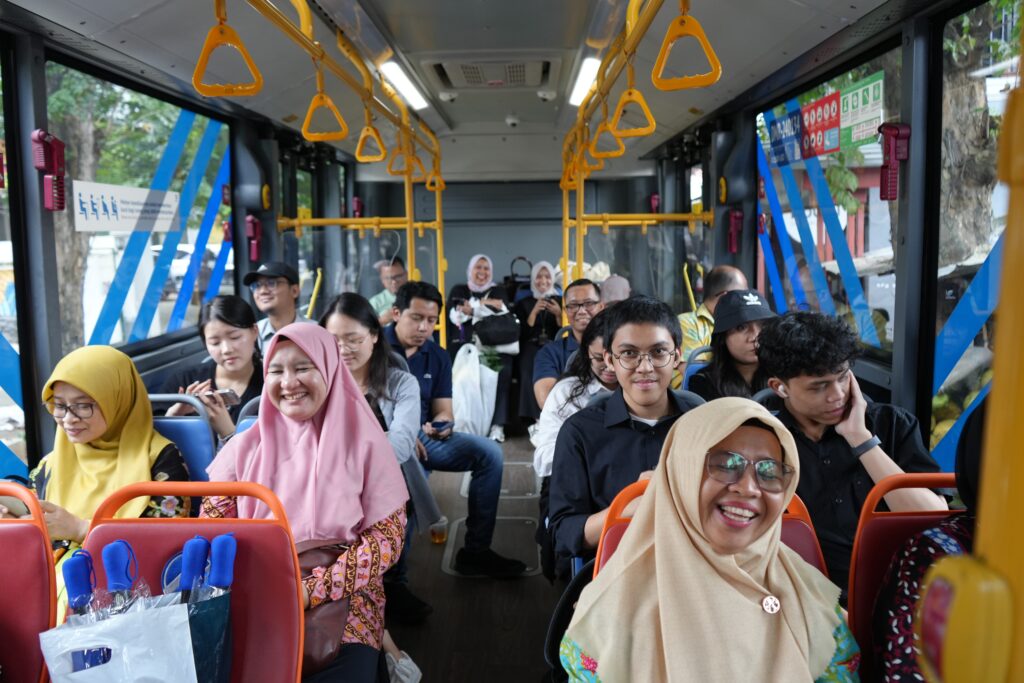
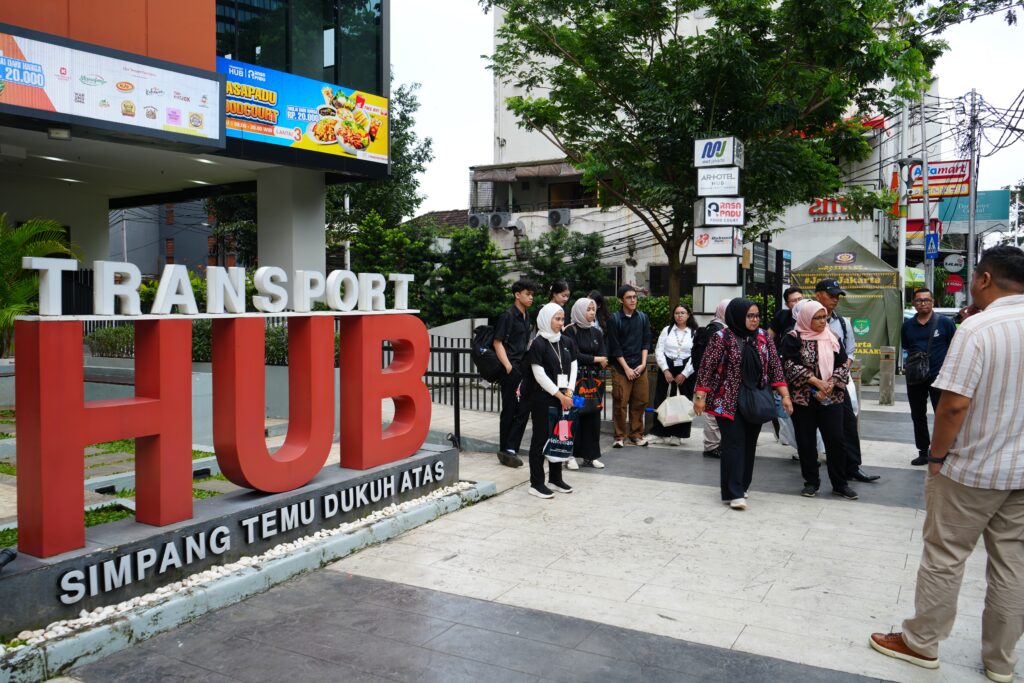
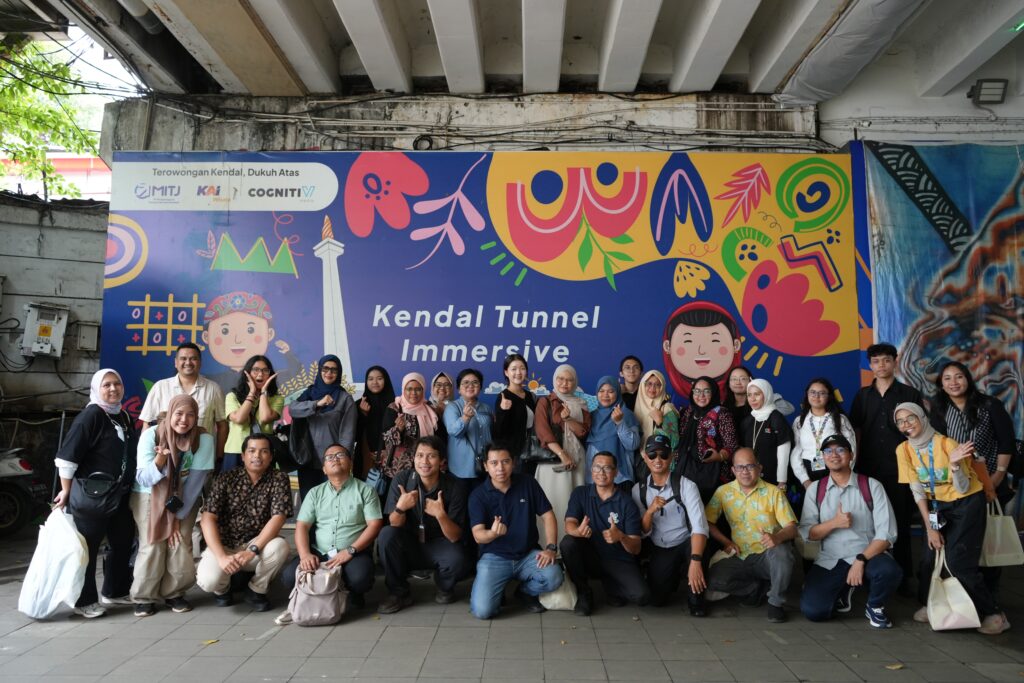
Dukuh Atas TOD in Jakarta promotes compact, mix-used urban development around multiple public transport modes, including the LRT, MRT, TransJakarta (the capital’s BRT system), the KRL Commuter Train line, and the Airport Rail Link – all integrated within a walkable, and pedestrian-friendly urban design. As a result, this visit demonstrated how coordinated land-use planning and public transport integration can enhance connectivity, reduce congestion, and lower emissions.
Together, the Sala Alir WRU launch and TOD visit demonstrated how integrated approaches to water management, public space revitalisation, and sustainable mobility can form a coherent urban climate resilience strategy.
Ultimately, this consolidated event reaffirmed the essential role of partnerships between local governments, regional networks, and technical experts in ensuring climate action is practical, adaptable, and inclusive. Through the day’s lessons in interlikages in water-sensitive infrastructure, nature-based solutions, and transit-oriented development, we are once again reminded how people and environment-centered urban planning has importance in addressing the interconnected risks of climate change and urbanisation.
Ways Forward
Beyond Jakarta, some of CRIC Project’s pilot cities are also advancing responses to climate risks. Banjarmasin, known as the “City of a Thousand Rivers” continues to strengthen river-based adaptation strategies to mitgate the impacts of climate change. The riverfront city of Samarinda is navigating flood risks through improved urban water management and resilience planning. In Gorontalo, water scarcity management and sanitation programmes remain central to the city’s climate adaptation efforts. To explore how CRIC pilot cities are translating climate commitments into tangible local action, watch their featured videos and learn more about their journeys toward resiliency through our YouTube channel.