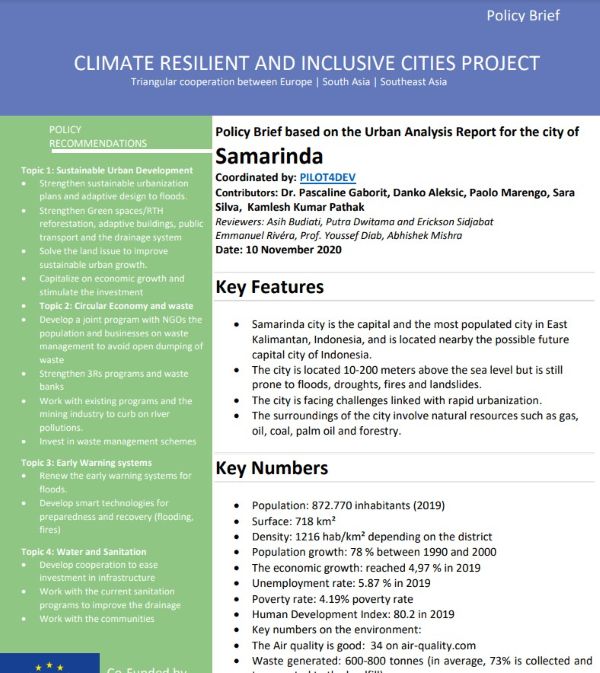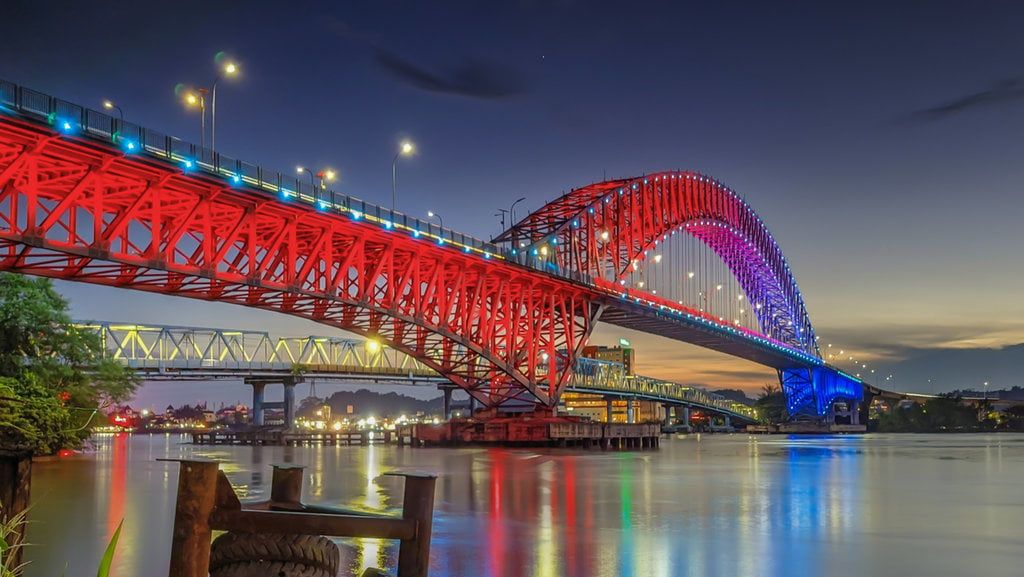

Samarinda, the capital city of East Kalimantan Province in Indonesia, is located on the island of Borneo. The city lies along the banks of the Mahakam River at an elevation ranging from 10 to 200 meters above sea level, under a wet tropical climate. Known as the most populated city in East Kalimantan with 842,691 residents (2019), Samarinda boasts a high Human Development Index (HDI) of 80.2, surpassing the national average of 71.9.
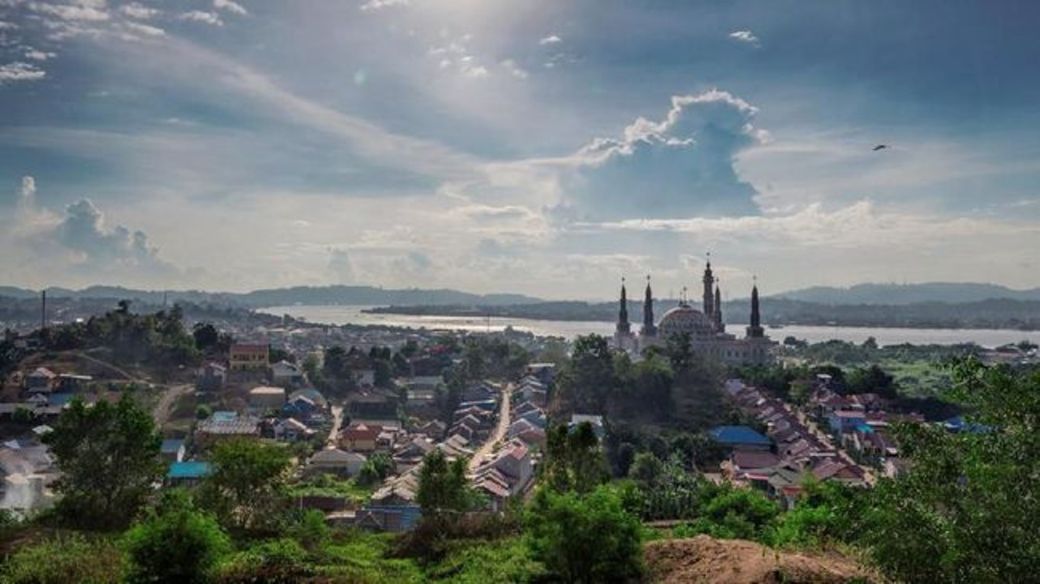
Samarinda is among Indonesia’s wealthiest cities, leveraging its abundant natural resources, including oil, gas, coal, palm oil, and timber. The city integrates sustainable development goals (SDGs) into its strategic planning through initiatives such as the Medium-term Development Plan (RPJMD) 2016–2021 and its Local SDG Action Plan (2018–2021), which address issues like river pollution, waste management, and spatial planning.
The city has made strides in environmental sustainability by adopting regulations to reduce waste, such as banning single-use plastics through the Mayor Regulation (Perwali No.1, 2019) and enforcing proper waste disposal through the Local Regulation (Perda No.2, 2011). Despite these efforts, green open spaces account for only 5.13% of the area, well below the national target of 30%.
Samarinda is also addressing its vulnerability to floods by preparing a Disaster Risk Study (KRB), focusing on institutional capacity, disaster management, and community education. Efforts are underway to enhance early warning systems, leveraging smart technologies to better predict and mitigate disasters.

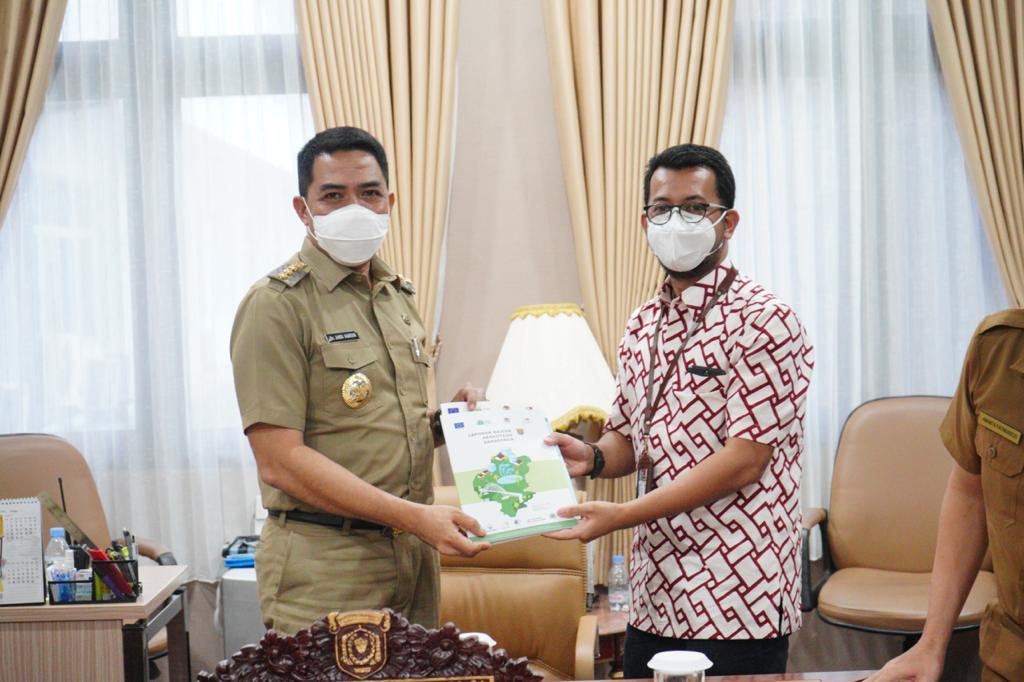
The CRIC (Climate Resilient and Inclusive Cities) project supports these initiatives by promoting waste prevention, circular economy practices, and partnerships with the private sector. Through these measures, Samarinda strives to balance its resource-based economy with sustainable and inclusive urban development.